


2008
The Ministerial Declaration on Adult Community Education recognises the role of ACE in providing pathways to further education and training for ‘second chance’ learners.
The Ministerial Declaration on Adult Community Education recognises the role of ACE in providing pathways to further education and training for ‘second chance’ learners.
Australian Journal of Adult and Community Education changes to Australian Journal of Adult Learning.
UNESCO Hamburg conference acknowledges the value of adult education. Beyond Cinderella: Towards a learning society seeks to bring together national ACE & VET policy
First Adult Learners’ Week celebrated in Australia (10-16 Sept).

The National collaborative adult English language and literacy strategy provides a blueprint for governments to work together with industry and the community sector to develop and deliver an integrated national literacy and language strategy.
First Adult Learners Week celebrated in the UK.
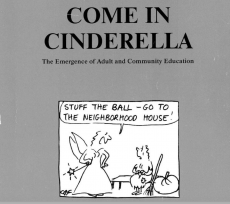
Come in Cinderella: The emergence of adult and community education Senate Report formally recognises ACE as the fourth sector of education and highlighted features that differentiated it from other sectors i.e. its lifelong learning philosophy and role in giving people a ‘second chance’ to overcome shortcomings in previous formal education and training. ACE formally recognised […]

World Conference on ‘Education for all’ emphasises access to quality basic education for all. Training Reform Agenda aims to increase productivity through industry reform of the VET system. Mezirow publishes major works on critical, transformative and emancipatory learning. New journal title Australian Journal of Adult and Community Education edited by Professor Roger Harris.

Lifelong education revisited discussion paper argues that economic, technological and social changes mean it is essential to involve people of all ages in a continuing process of education & training. First Adult Learners Week celebrated is in the US. Competency-based training announced in Australia by Ministerial decree. AAAE & AAACE merge in September 1989.

A nation of learners report (Evans) stresses the importance of participation by a wide range of adults not in education, employment or training.

Johnson & Hinton: ‘Adult and continuing education in Australia’ (1985) highlights the importance of adult education and its contribution to the community, particularly women. AAAE establishes the Network of Women in Australian Adult and Community Education (becoming WAVE in 2001).

ABS national survey in 1984 identifies 13.6% of adults are involved in programs or courses of adult education. Barrie Brennan, UNE became AJAE Editor.
The Board of Adult and Community Education in NSW sought to stimulate community agencies to boost their provision as TAFE NSW virtually withdrew from adult education courses.

1980s a ‘decade of women’ for AAAE. A community-based adult education movement emerged (particularly in Victoria), which had national implications.

Community education emerging. The Association undertakes first ‘commissioned research’. AAAE felt vulnerable with the rise of the Australian Association of Adult and Community Education (AAACE).